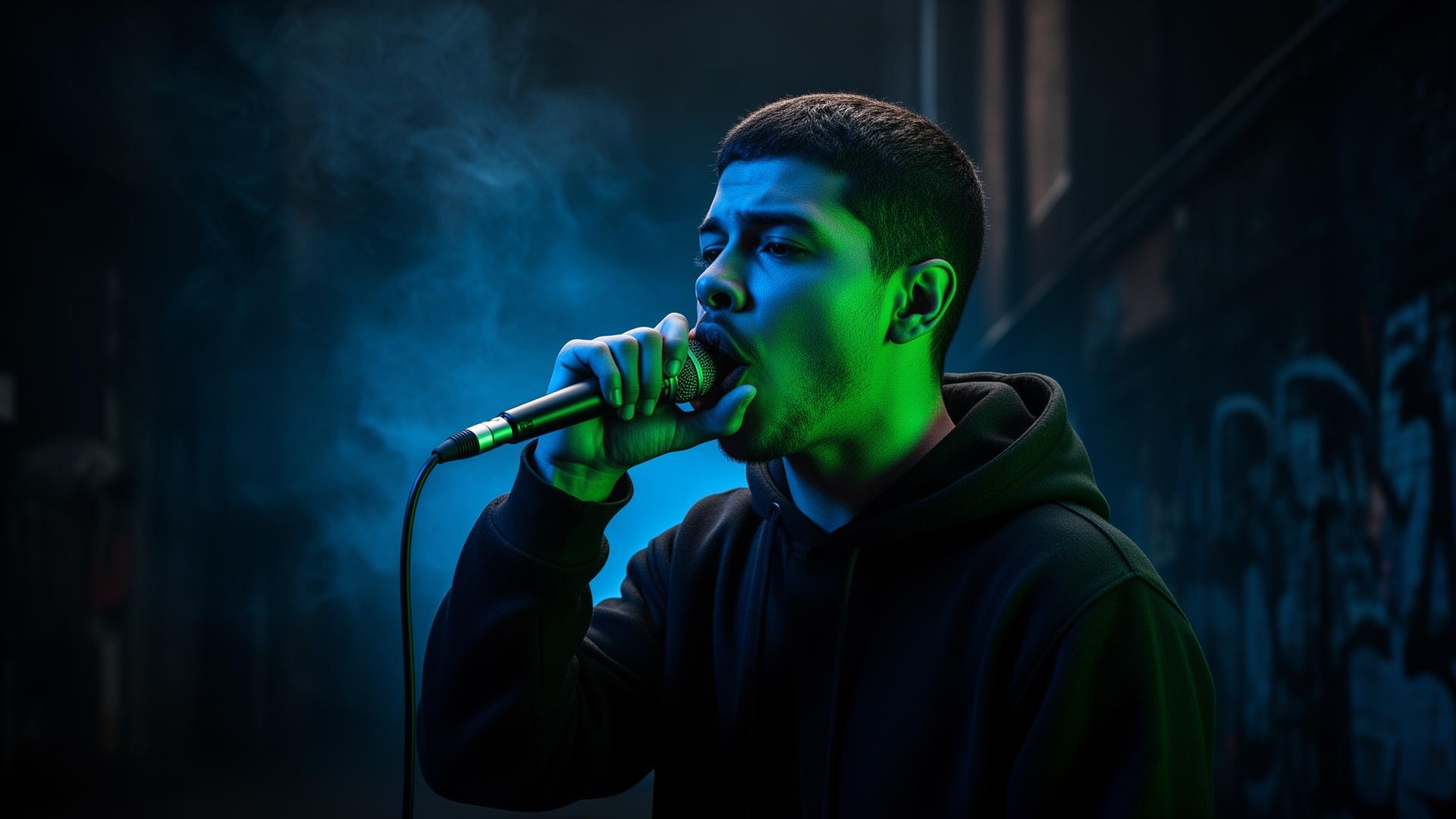
Inward Sounds: Learning Beatboxing on the Inhale
Inward sounds — those made while inhaling — are how beatboxers perform minute-long beats without noticeable breathing pauses. Once you master them, your entire sound will transform.

Why Inward Sounds Are Crucial
Outward (exhaling) is the standard direction. Beatboxers who only use outward sounds must breathe between phrases, creating a break in the sound.
Inward sounds fill this gap: the beat continues as you inhale. The result is a seamless, almost machine-like soundscape.
The Most Important Inward Sounds
Inward-K: sharp, precise, great as a snare substitute. Inward-T: soft, perfect for hi-hats on the inhale.
Inward-Bass: deep and vibrating, one of the most powerful bass sources in modern beatboxing. Often combined with the lip oscillator.
How to Practice Inward Sounds
Start with the Inward-K: sharply draw in air while forming a 'K' from your throat. It will sound unusual at first, which is normal.
Practice in short drills: 8 outward, 8 inward. Once the switch becomes automatic, integrate inward sounds into your patterns.
Breathing Management in Patterns
Pro beatboxers plan breathing like drummers plan rests: at fixed points in the pattern where inward sounds dominate.
The advantage: you can perform for hours without audibly taking a breath. Your body automatically finds the balance between inhaling and exhaling.
Practical tips for your next session
Plan your practice session on inward sounds in three clear blocks: warm-up, focused drill and free play. This keeps your training varied and prevents voice and lip fatigue.
Record yourself on your phone and listen back two hours later — the time gap reveals weaknesses you overhear in the live moment. Note one concrete detail to work on in your next session.
Drink room-temperature water before and after practice and avoid coffee or milk right before a session. A warm, well-hydrated voice sounds fuller and survives longer sessions without going hoarse.
Next steps and further resources
If you want to deepen the topic of sounds systematically, it pays to choose a structured learning path instead of consuming scattered YouTube tutorials. Consistency beats quantity — 15 minutes a day does more than three hours on the weekend.
Connect with others: Discord servers, local beatbox meetups and open-mic nights speed up your progress significantly because you get direct feedback and fresh inspiration. Find at least one community that matches your level.
Set yourself a realistic 30-day goal around inward sounds — for example a complete beat at two tempos, one cleanly executed technique, or a 60-second showcase. Measurable goals make progress visible and keep motivation high.
Frequently Asked Questions
Are inward sounds dangerous for the voice?
No, as long as you breathe cleanly and don't strain. Drink plenty of water, and inward sounds are unproblematic long-term.
Which inward sound is the easiest?
The Inward-K. It works similarly to the spoken 'K' and is intuitively accessible.
Can I do inward and outward at the same time?
No, not simultaneously. But you can switch very rapidly, and to the ear, it sounds like a continuous beat.