Beatboxing as Oral Motor Training.
More and more speech therapists and orthodontists recommend beatboxing as a playful supplement to classic exercises. Breathing, tongue control, lip tension, and precise articulation — exactly what is trained in beatboxing is also what is worked on in speech therapy.
Important Note
We are not doctors, speech therapists, or orthodontists. The content on this page does not replace a medical diagnosis or therapy. For speech errors, pronunciation disorders, orthodontic abnormalities, or other health questions, please contact a speech therapy practice, orthodontic practice, or your pediatrician directly. Beatboxing can be a valuable supplement — but not a replacement for professional treatment.
What beatboxing has to do with speech.
At its core, beatboxing is high-precision oral motor skills. To produce a clean kick, a snare, or a hi-hat, the lips, tongue, palate, jaw, and breathing must work together exactly — the same musculature responsible for clear pronunciation.
In addition, there's rhythm and breath control. Those who beatbox almost incidentally learn diaphragmatic breathing, targeted inhalation and exhalation, and control of the airflow — building blocks that are also central to voice and speech therapy.
Lips & Jaw
Strength, tension, and mobility of the orofacial muscles — relevant e.g. for lisping or open mouth posture.
Tongue Control
Targeted tongue tip and tongue back movements, as used for /t/, /k/, /s/, and /r/.
Breathing
Conscious diaphragmatic breathing and breath support — the basis of all voice work and speech therapy.
Auditory Processing
Rhythm, beat, and sound differentiation — important precursor skills for written language.
Foundation for Speech and Beatboxing.
Controlled breathing is the basis for both fluent speech and beatboxing. In speech therapy practice, breath therapy is a central component — beatbox exercises provide a natural bridge here because they embed breath work in a musical context.
Measured Airflow
Beatbox sounds require precisely measured breath pressure — from explosive (Kick) to finely controlled (HiHat). Trains the conscious control of airflow while speaking.
Diaphragmatic Breathing
A deep abdominal breath is necessary for powerful sounds — costo-abdominal breathing, which is also considered the goal breathing in voice therapy.
Breathing Rhythm
Beatbox patterns force a regular breathing rhythm. This can help with fluency disorders, where the natural breathing rhythm during speech is often disrupted.
Extended Exhalation
Many beatbox sounds are produced on the exhale. Controlled, extended exhalation is a central therapy goal for functional voice disorders.
Three Perspectives.
My child has a speech error
If your child lisps, cannot form individual sounds, or has delayed speech development, speak with your pediatrician first. Beatboxing can provide accompanying fun with their own voice — and turn oral motor exercises from therapy into a cool hobby instead of a tedious chore.
As a therapy component
Beatbox sounds are suitable as motivating exercises for oral diadochokinesis, sound differentiation, breath support, and speech rhythm — especially for children, adolescents, and young adults who find classic exercises boring.
Functional accompaniment
For myofunctional abnormalities (e.g., tongue thrusting, open mouth posture, mouth breathing), targeted training of lip, tongue, and jaw movement can be useful. Beatboxing can supplement these exercises — professional guidance remains in your hands, of course.
The orofacial muscles in detail.
To understand why beatboxing has a therapeutic effect, it's worth taking a look at the muscles involved — and which sounds address which muscle groups.
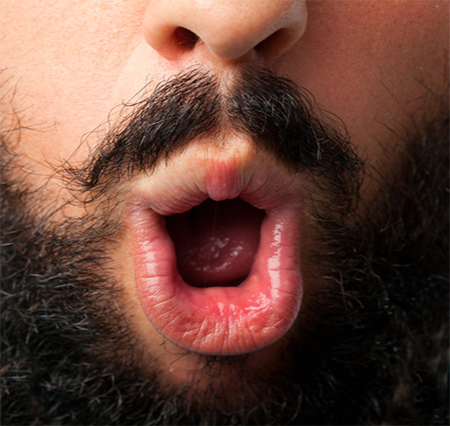
Lip Muscles
M. orbicularis oris
Kick (B) · Lip Roll
The orbicularis oris is the central muscle for lip closure. It is intensively trained during the kick sound and the lip roll. Competent lip closure is a prerequisite for correct nasal breathing and prevents protrusion of the front teeth.
Tongue Muscles
Intrinsic & Extrinsic
HiHat (Ts) · Click Roll
The tongue consists of shape-changing (intrinsic) and position-changing (extrinsic) muscles. The hi-hat requires a precise tongue tip position (extrinsic), while the tongue click strengthens the intrinsic tongue muscles.
Cheek Muscles
M. buccinator
Snare (Pf) · Inward Sounds
Activated during the snare sound and inward sounds. This muscle is important for the correct swallowing pattern and food breakdown — relevant in MFT.
Velum (Soft Palate)
M. tensor & levator veli palatini
Oral ↔ Nasal Switch
Control the opening and closing of the nasopharynx. Beatbox sounds train the switch between oral and nasal airflow — relevant in rhinolalia therapy.
Laryngeal Muscles
Vocal Folds & Larynx
Throat Bass
Advanced sounds like the throat bass train the vocal folds and the laryngeal muscles — relevant for voice therapy.
Fluency Disorders.
Stuttering and cluttering are among the most common indications in speech therapy practice. In fluency disorders, the natural speech rhythm is interrupted. Beatboxing offers a unique approach: it trains rhythm, timing, and breath control in a musical context. The rhythmic structure of beatbox patterns (B Ts Pf Ts) can help establish a more stable speech rhythm pattern — and concentrating on the beat simultaneously distracts from speech pressure.
Snare (Pf) — Lateral Airflow
The snare sound combines bilabial closure with lateral airflow — a complex coordination exercise.
Execution
- 1.Form the /p/ sound without using voice.
- 2.Direct the air laterally over the sides of the tongue.
- 3.Release the air with a sharp /f/ sound.
Therapeutic Benefit
- · Lip strength (orbicularis oris)
- · Tongue position control
- · Airflow dosing
Target Sounds
Supportive for the precise formation of plosives (/p/, /b/) and fricatives (/f/, /v/).
The Beatalk Method.
The most significant study on beatboxing in speech therapy was presented by the Israeli researcher Michal Icht (2019). She developed the „Beatalk" technique: over-articulated phonemes in a rhythmic-musical context — exactly the sounds that are practiced in classic articulation therapy in often monotonous repetitions. Beatalk replaces the repetitive exercise with an a cappella beat: the same training effect, but playful, social, and motivating.
„Introducing the Beatalk technique"
Int. Journal of Language & Communication Disorders, Vol. 54 (3), 2019, pp. 401–416. DOI 10.1111/1460-6984.12445.
Setting
- · 12 Adults (24–48 yrs)
- · Moderate cognitive impairment
- · Reduced speech intelligibility
- · Group setting
Intervention
- · 6 weeks of therapy
- · 6 pers. Beatalk group
- · 6 pers. classic speech therapy (control)
- · Pre/Post measurement
Result
- · Both groups improved
- · Beatalk: larger effect sizes
- · Articulation accuracy ↑
- · Vocal parameters ↑
Four principles of the Beatalk method
Phoneme Intensification
Beatbox sounds are at their core over-articulated phonemes: /b/, /p/, /t/, /k/, /ts/, /pf/. Every beat forces precise formation — exactly those sounds that become blurred in dysarthria and pronunciation disorders.
Rhythmic Anchoring
The musical beat replaces the inner speech metrum. Patients with reduced speech rate or irregular prosody receive an external tempo to orient themselves to.
Group Capability
Beatalk works a cappella — no equipment, no accompaniment. Patients can sit in a circle, take turns, and hold a beat together. This creates social bonding and reduces speech anxiety.
Intrinsic Motivation
Unlike repetitive /pa-ta-ka/ exercises, a beatbox pattern immediately sounds like music. Icht describes significantly higher treatment adherence and self-motivation — the key factor for adults with cognitive impairment.
Transferability to Everyday Clinical Practice
Even though the original study was conducted with adults with cognitive impairment, Icht describes the principle broadly on purpose. Speech therapists in German-speaking regions use Beatalk-inspired elements for:
- · Dysarthria (e.g., after a stroke, with Parkinson's) — phoneme intensification & speech rate
- · Childhood Apraxia of Speech (CAS) — combining motor skills, rhythm, and sound formation
- · Stuttering therapy — external rhythm reduces speech pressure
- · Aphasia rehab — beatbox-based singing as a bridge (analogous to Melodic Intonation Therapy)
- · MFT & pediatric speech therapy — as a playful homework assignment
Note: Beatalk is not a protected therapy protocol. Transferring it to other indications requires professional guidance by trained speech therapists.
Studies & Sources.
Scientific exploration of beatboxing as a supporting tool in speech therapy, voice therapy, and rehabilitation is still in its early stages — but there are already promising works and practice projects:
Study · 2019
Icht, M.: „Introducing the Beatalk technique"
Published in the International Journal of Language & Communication Disorders (Vol. 54, No. 3, 2019). The study examines how beatbox sounds and rhythms can improve the speech intelligibility of adults with cognitive impairment — with measurable positive effects on articulation and speech rate.
Read PDF →Research Project · University of Halle
Prof. Sallat: Beatboxing for language support
In the „Pedagogy for Speech and Communication Disorders" department at the Martin Luther University of Halle-Wittenberg, it is being investigated how beatboxing can help children with developmental language disorders (DLD) playfully train articulation and prevent language development disorders.
Project description →Public Engagement Study · 2019
„Beatboxing for Creative Rehabilitation after Laryngectomy"
Published in Frontiers in Psychology / PMC: Beatboxing techniques are described here as a creative tool in rehabilitation after laryngectomy — an indication of how flexibly beatbox methods can be integrated into voice and breath therapy contexts.
Open study →Specialist Article · Thieme
Sprache · Stimme · Gehör
Contribution in the speech therapy journal Sprache · Stimme · Gehör (Thieme) on the use of beatboxing elements in speech therapy practice.
Abstract at Thieme →
The sources cited here were compiled to the best of our knowledge. They do not represent a complete state of research and no therapy recommendation. For a professional assessment, please contact your speech therapist or orthodontist.
The 4-Week Crash Course as a therapy supplement.
The crash course is suitable as a structured supplement to speech therapy treatment — with video, image, and sound material as well as step-by-step instructions for all basic sounds. Speech therapists can recommend the course as homework material: the exercises are structured so that patients can perform them independently.
Basics
Breathing, mouth positioning, and the three basic sounds (Kick, HiHat, Snare).
First Beats
Combining sounds into simple rhythms — building diadochokinesis.
Advanced
Lip roll, bass drops, and more complex patterns — fine motor skills of the lips.
Creativity
Own beats, special sounds, and performance — transfer to everyday life.
Frequently Asked Questions.
Curious to learn more?
Our 4-week crash course is not a therapy program — but a playful introduction to exactly the oral motor, breathing, and rhythm exercises that make beatboxing so exciting.