Beatboxing as Therapeutic Oral-Motor Training
Beatbox School has adapted the principle of targeted muscle training in the oral cavity and developed the MyoBeatbox concept — an approach that combines the principles of orofacial myofunctional therapy (OMT) with beatbox exercises.
The idea: every beatbox sound activates specific muscle groups in the orofacial area. Instead of isolated exercises targeting individual muscles, beatbox sounds train the orofacial muscles in a musical, rhythmic context. The result is exercises that are therapeutically effective — but feel like making music, not doing therapy.
The approach is built on three principles:
- Targeted muscle activation: Each sound addresses defined muscle groups — Kick (B) targets the orbicularis oris, HiHat (Ts) the tongue muscles, Snare (Pf) the buccinator
- Rhythmic repetition: Embedding exercises in beats creates natural repetition patterns — the foundation of muscular training
- Intrinsic motivation: Making music motivates more than isolated drills — especially for children and teenagers
This approach can be understood as a form of music-based speech therapy. While traditional music therapy often uses instruments, beatboxing uses the body itself as the instrument — training exactly the muscles relevant to speaking and swallowing. The connection between music therapy and speech therapy is increasingly supported by current research (including studies at Martin Luther University Halle-Wittenberg) as a promising approach to speech development.
The concept was developed in collaboration with speech therapists and orthodontists and is regarded by professionals across speech-language pathology (SLP, US), speech and language therapy (SLT, UK), and speech pathology (Australia) as a meaningful complement to conventional therapy. Whether your goal is improving articulation, strengthening oral-motor function, or supporting overall speech development — this music-based approach offers a practical, evidence-informed method that works across clinical and educational settings worldwide.
Myofunctional Therapy and Beatboxing: The Parallels
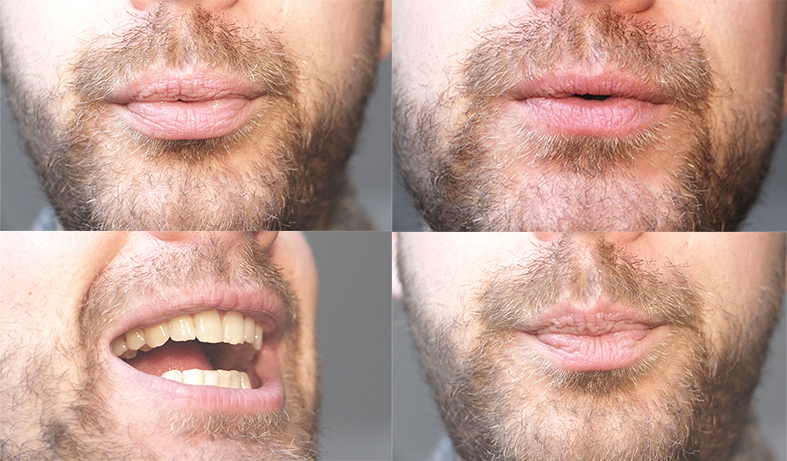
Beatboxing is, at its core, highly precise orofacial training. The parallels to orofacial myofunctional therapy (OMT) are no coincidence — both work with the same muscle groups:
- Orbicularis oris (lip ring muscle): The beatbox Kick sound "B" trains exactly the bilabial closure also used in OMT to improve lip seal
- Tongue muscles: The HiHat sound ("Ts") requires precise tongue tip positioning behind the alveolar ridge — the same position targeted when correcting an interdental lisp
- Buccinator (cheek muscles): Inward beatbox sounds train the cheek muscle, which is important for proper chewing and swallowing patterns
- Velum (soft palate): Nasal beatbox sounds specifically activate the velopharyngeal muscles — a central therapy goal in resonance disorders
This music-based approach systematically leverages these parallels: instead of performing isolated muscle exercises, therapeutically relevant movements are embedded in musical patterns. The result is improved articulation accuracy, phonological precision, and muscle coordination — wrapped in a creative, rhythmic context that turns oral-motor drills into music. Speech-language pathologists (SLPs), speech and language therapists (SLTs), and speech pathologists alike recognise the therapeutic value of this music-based training method for speech development.
Therapeutic Focus: Speech Sound Disorders
Articulation and phonological disorders — one of the most common indications in speech therapy practice. In speech sound disorders, individual sounds or sound combinations are misarticulated, substituted, or omitted. Since every beatbox sound requires precise positioning of lips, tongue, and jaw, beatboxing trains the motor precision needed for correct sound production. The exercises are so engaging that children willingly repeat them — even outside therapy sessions.
Exercise Spotlight: The Tongue Click for Tongue Retraction and Palate Activation
The tongue click — used in beatboxing as a Click Roll — trains the suction movement of the tongue against the palate:
How to do it:
- Suction the tongue flat against the palate (broad contact)
- Slightly lower the jaw while the tongue stays on the palate
- Release the tongue edge laterally — a clicking sound is produced
- For the Click Roll: repeat the clicks in rapid succession
Therapeutic benefits:
- Trains tongue retraction — central for correct resting tongue posture on the palate
- Promotes palate-tongue contact needed for correct swallowing patterns
- Strengthens overall tongue musculature
- Improves tongue mobility (tongue motility)
Integration into therapy: The tongue click is a classic myofunctional therapy exercise that gains motivation through the beatbox context. 20–30 clicks per session is a good benchmark.
Evidence Base: What Research Shows
The approach is built on a growing evidence base supporting the use of beatboxing in speech therapy and music therapy:
- Icht (2019): The study "Beatboxing as speech therapy" examined the use of beatbox exercises in speech-language pathology and showed positive effects on articulation and oral-motor function
- Martin Luther University Halle-Wittenberg: Prof. Stephan Sallat's research demonstrates how children learn to speak through beatboxing — results show that beatboxing promotes articulation and can help prevent speech development disorders
- Music therapy for speech disorders (Thieme, 2024): Current research shows that music therapy is effective for speech, language, and communication disorders — beatboxing combines these findings with targeted oral-motor training
- Myofunctional therapy foundations (Garliner, Kittel): The foundations of OMT — targeted training of orofacial muscles — form the theoretical basis for this approach
- Phonological awareness through music: Studies demonstrate that musical training improves verbal memory and syntax processing in children — core competencies of speech and language development
Important: The concept positions itself as an evidence-based complement to speech therapy, not a replacement for conventional treatment. It combines principles of music therapy with speech therapy goals — a music-based tool in the therapeutic toolbox that supports articulation, phonological awareness, and speech development across all age groups.
Voice Training Through Beatboxing: Not Just for Children
The exercises are not only relevant for children and teenagers. Adults also benefit from targeted orofacial training — especially people in voice-intensive professions:
- Teachers: Voice strain from classroom teaching is a common problem. Beatbox exercises strengthen the voice and breathing muscles and can work preventively against vocal fatigue
- Presenters and public speakers: Clear articulation and controlled breathing are professionally essential. The basic sounds train exactly these skills
- Singers and musicians: Beatboxing expands the vocal palette and trains areas of the vocal tract less used in singing
- Speech therapists themselves: First-hand experience with the exercises enables better guidance of patients
Beatbox-based oral-motor training offers an appropriate approach for every target group — from therapeutic use with children to preventive voice training for adults. Across all age groups, the music-based exercises support speech development and phonological awareness through engaging, rhythmic practice.
Recommend the Beatbox Crash Course as a Therapy Complement
The 4-week crash course from Beatbox School works as a structured complement to speech therapy. It includes video, image, and audio material with step-by-step instructions for all basic sounds — the foundation for the concept.
Speech therapists (SLPs, SLTs, speech pathologists) can recommend the crash course as take-home practice material — the exercises are designed for independent practice.
The course at a glance:
- Week 1: Foundations — breathing, mouth positioning, and the three basic sounds (Kick, HiHat, Snare)
- Week 2: First beats — combining sounds into simple rhythms
- Week 3: Advanced — Lip Roll, bass drops, and more complex patterns
- Week 4: Creativity — original beats, special sounds, and performance
Each week builds on the previous one. The exercises work without any musical background. Currently available for €19.99 (reduced from €99). A music-based, structured path to better articulation and speech development.
Important Note
We are not doctors, speech therapists, or orthodontists. The content on this page does not replace a medical diagnosis or therapy. For speech errors, pronunciation disorders, orthodontic abnormalities, or other health questions, please contact a speech therapy practice, orthodontic practice, or your pediatrician directly. Beatboxing can be a valuable supplement — but not a replacement for professional treatment.