Beatboxing as Therapeutic Oral-Motor Training
Beatbox School has adapted the principle of targeted muscle training in the oral cavity and developed the MyoBeatbox concept — an approach that combines the principles of orofacial myofunctional therapy (OMT) with beatbox exercises.
The idea: every beatbox sound activates specific muscle groups in the orofacial area. Instead of isolated exercises targeting individual muscles, beatbox sounds train the orofacial muscles in a musical, rhythmic context. The result is exercises that are therapeutically effective — but feel like making music, not doing therapy.
The approach is built on three principles:
- Targeted muscle activation: Each sound addresses defined muscle groups — Kick (B) targets the orbicularis oris, HiHat (Ts) the tongue muscles, Snare (Pf) the buccinator
- Rhythmic repetition: Embedding exercises in beats creates natural repetition patterns — the foundation of muscular training
- Intrinsic motivation: Making music motivates more than isolated drills — especially for children and teenagers
This approach can be understood as a form of music-based speech therapy. While traditional music therapy often uses instruments, beatboxing uses the body itself as the instrument — training exactly the muscles relevant to speaking and swallowing. The connection between music therapy and speech therapy is increasingly supported by current research (including studies at Martin Luther University Halle-Wittenberg) as a promising approach to speech development.
The concept was developed in collaboration with speech therapists and orthodontists and is regarded by professionals across speech-language pathology (SLP, US), speech and language therapy (SLT, UK), and speech pathology (Australia) as a meaningful complement to conventional therapy. Whether your goal is improving articulation, strengthening oral-motor function, or supporting overall speech development — this music-based approach offers a practical, evidence-informed method that works across clinical and educational settings worldwide.
Myofunctional Therapy and Beatboxing: The Parallels
Beatboxing is, at its core, highly precise orofacial training. The parallels to orofacial myofunctional therapy (OMT) are no coincidence — both work with the same muscle groups:
- Orbicularis oris (lip ring muscle): The beatbox Kick sound "B" trains exactly the bilabial closure also used in OMT to improve lip seal
- Tongue muscles: The HiHat sound ("Ts") requires precise tongue tip positioning behind the alveolar ridge — the same position targeted when correcting an interdental lisp
- Buccinator (cheek muscles): Inward beatbox sounds train the cheek muscle, which is important for proper chewing and swallowing patterns
- Velum (soft palate): Nasal beatbox sounds specifically activate the velopharyngeal muscles — a central therapy goal in resonance disorders
This music-based approach systematically leverages these parallels: instead of performing isolated muscle exercises, therapeutically relevant movements are embedded in musical patterns. The result is improved articulation accuracy, phonological precision, and muscle coordination — wrapped in a creative, rhythmic context that turns oral-motor drills into music. Speech-language pathologists (SLPs), speech and language therapists (SLTs), and speech pathologists alike recognise the therapeutic value of this music-based training method for speech development.
Therapeutic Focus: Tongue Thrust / Swallowing Disorder
Abnormal swallowing pattern and tongue posture — one of the most common indications in speech therapy practice. In tongue thrust (infantile swallowing pattern), the tongue pushes against or between the front teeth during swallowing instead of pressing against the palate. Over time, this can lead to an open bite or protrusion of the front teeth. Beatbox exercises train the correct tongue resting position on the palate and strengthen the tongue muscles needed for a physiological swallowing pattern.
Exercise Spotlight: The Lip Roll for Lip Tension and Breath Control
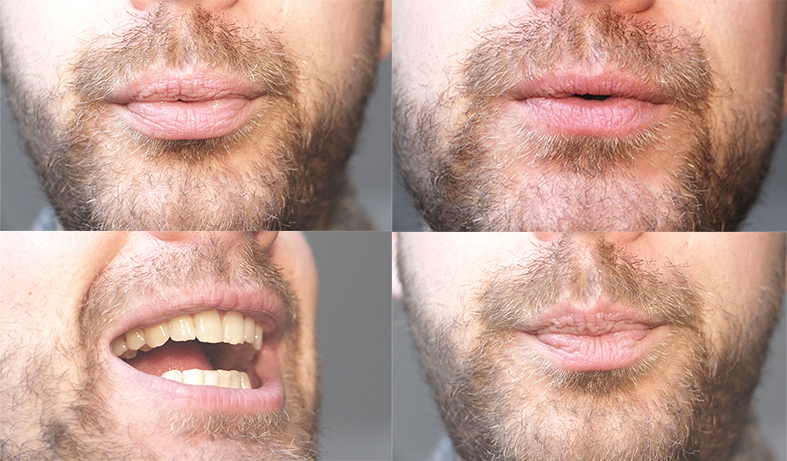
The Lip Roll produces a buzzing, vibrating bass sound through lip flutter — an exercise also used in classical voice therapy:
How to do it:
- Place your lips loosely together (don't press)
- Create a steady airflow through the lips
- The lips start to vibrate — a deep, humming sound emerges
- Hold the sound as long and steadily as possible
Therapeutic benefits:
- Trains fine-tuned lip tension control (neither too tight nor too loose)
- Promotes breath control and steady exhalation
- Loosens the perioral muscles
- Used in voice therapy as "Lip Trill" for voice initiation
Integration into therapy: The Lip Roll works as a lip warm-up and breathing exercise. The duration of the sound serves as a measurable progress indicator.
Beatbox Exercises in Speech Therapy Practice
How can music-based oral-motor training be integrated into everyday speech therapy practice? Whether you're an SLP (US), SLT (UK), or speech pathologist (Australia), here are proven approaches that bridge therapeutic music-making and speech therapy:
As a warm-up exercise (5 minutes at the start): The three basic sounds — Kick (B), HiHat (Ts), Snare (Pf) — work perfectly as a warm-up. They activate lips, tongue, and cheeks and prepare the orofacial muscles for therapy work. 10 repetitions per sound, then combine into a beat: B Ts Pf Ts.
As homework: These exercises have a crucial advantage over traditional homework: children and teens do them voluntarily because they're making music — not "practising." The Beatbox School crash course works well as a structured guide for home practice.
As a motivation tool: When therapy motivation dips, a beatbox beat can serve as a reward at the end of a session. The connection between therapeutic exercise and musical achievement strengthens therapy adherence.
As a diagnostic instrument: The ability to perform certain beatbox sounds reveals orofacial muscle strength and coordination. For example: can a child cleanly produce the Kick sound (B)? Then their lip seal is fundamentally intact. This music-based diagnostic approach gives clinicians quick insight into articulation readiness.
Recommend the Beatbox Crash Course as a Therapy Complement
The 4-week crash course from Beatbox School works as a structured complement to speech therapy. It includes video, image, and audio material with step-by-step instructions for all basic sounds — the foundation for the concept.
Speech therapists (SLPs, SLTs, speech pathologists) can recommend the crash course as take-home practice material — the exercises are designed for independent practice.
The course at a glance:
- Week 1: Foundations — breathing, mouth positioning, and the three basic sounds (Kick, HiHat, Snare)
- Week 2: First beats — combining sounds into simple rhythms
- Week 3: Advanced — Lip Roll, bass drops, and more complex patterns
- Week 4: Creativity — original beats, special sounds, and performance
Each week builds on the previous one. The exercises work without any musical background. Currently available for €19.99 (reduced from €99). A music-based, structured path to better articulation and speech development.
Important Note
We are not doctors, speech therapists, or orthodontists. The content on this page does not replace a medical diagnosis or therapy. For speech errors, pronunciation disorders, orthodontic abnormalities, or other health questions, please contact a speech therapy practice, orthodontic practice, or your pediatrician directly. Beatboxing can be a valuable supplement — but not a replacement for professional treatment.