Beatboxing as Therapeutic Oral-Motor Training
Beatbox School has adapted the principle of targeted muscle training in the oral cavity and developed the MyoBeatbox concept — an approach that combines the principles of orofacial myofunctional therapy (OMT) with beatbox exercises.
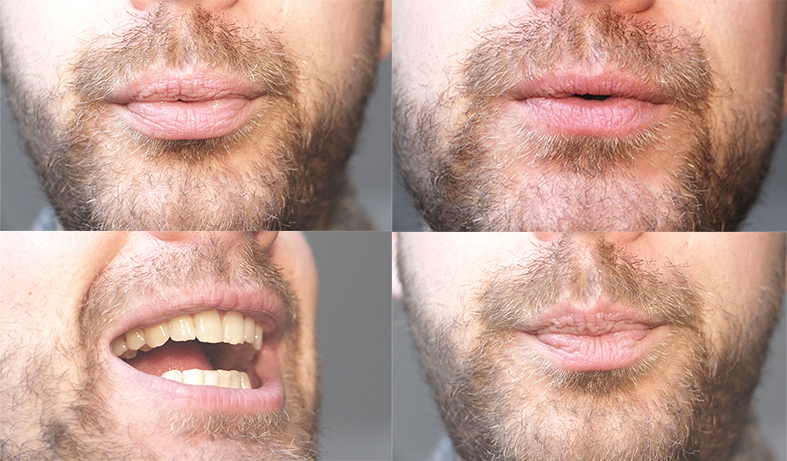
The idea: every beatbox sound activates specific muscle groups in the orofacial area. Instead of isolated exercises targeting individual muscles, beatbox sounds train the orofacial muscles in a musical, rhythmic context. The result is exercises that are therapeutically effective — but feel like making music, not doing therapy.
The approach is built on three principles:
- Targeted muscle activation: Each sound addresses defined muscle groups — Kick (B) targets the orbicularis oris, HiHat (Ts) the tongue muscles, Snare (Pf) the buccinator
- Rhythmic repetition: Embedding exercises in beats creates natural repetition patterns — the foundation of muscular training
- Intrinsic motivation: Making music motivates more than isolated drills — especially for children and teenagers
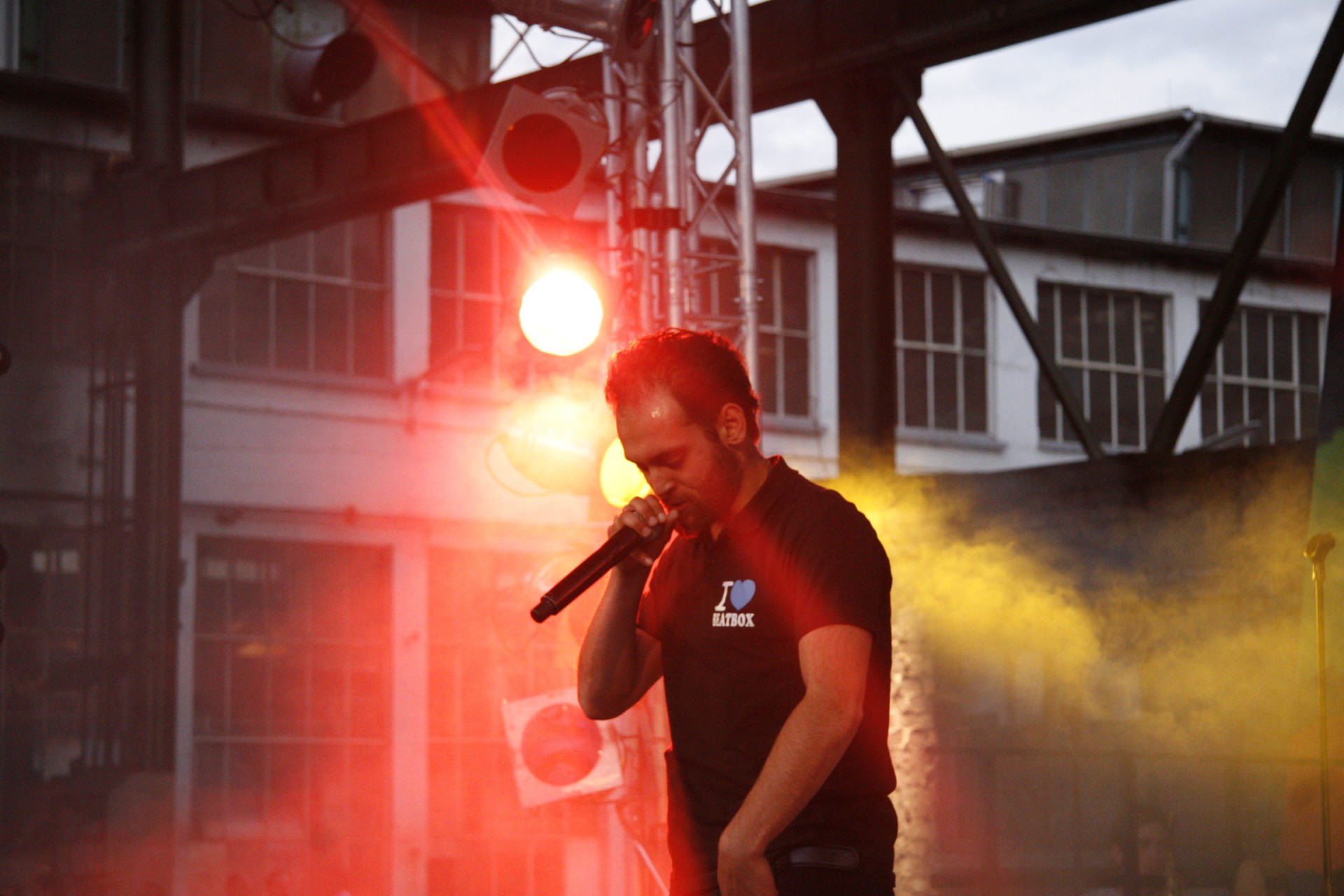
This approach can be understood as a form of music-based speech therapy. While traditional music therapy often uses instruments, beatboxing uses the body itself as the instrument — training exactly the muscles relevant to speaking and swallowing. The connection between music therapy and speech therapy is increasingly supported by current research (including studies at Martin Luther University Halle-Wittenberg) as a promising approach to speech development.
The concept was developed in collaboration with speech therapists and orthodontists and is regarded by professionals across speech-language pathology (SLP, US), speech and language therapy (SLT, UK), and speech pathology (Australia) as a meaningful complement to conventional therapy. Whether your goal is improving articulation, strengthening oral-motor function, or supporting overall speech development — this music-based approach offers a practical, evidence-informed method that works across clinical and educational settings worldwide.
Evidence Base: What Research Shows
The approach is built on a growing evidence base supporting the use of beatboxing in speech therapy and music therapy:
- Icht (2019): The study "Beatboxing as speech therapy" examined the use of beatbox exercises in speech-language pathology and showed positive effects on articulation and oral-motor function
- Martin Luther University Halle-Wittenberg: Prof. Stephan Sallat's research demonstrates how children learn to speak through beatboxing — results show that beatboxing promotes articulation and can help prevent speech development disorders
- Music therapy for speech disorders (Thieme, 2024): Current research shows that music therapy is effective for speech, language, and communication disorders — beatboxing combines these findings with targeted oral-motor training
- Myofunctional therapy foundations (Garliner, Kittel): The foundations of OMT — targeted training of orofacial muscles — form the theoretical basis for this approach
- Phonological awareness through music: Studies demonstrate that musical training improves verbal memory and syntax processing in children — core competencies of speech and language development
Important: The concept positions itself as an evidence-based complement to speech therapy, not a replacement for conventional treatment. It combines principles of music therapy with speech therapy goals — a music-based tool in the therapeutic toolbox that supports articulation, phonological awareness, and speech development across all age groups.
Therapeutic Focus: Resonance Disorders
Hypernasality and hyponasality (rhinolalia) — one of the most common indications in speech therapy practice. In resonance disorders, nasality during speech is disrupted — either too much nasal resonance (hypernasality) or too little (hyponasality). Beatbox sounds specifically train velopharyngeal control: oral sounds like Kick (B) and Snare (Pf) require a closed nasopharynx, while nasal humming practises conscious velum opening. This alternation between oral and nasal is exactly what resonance therapy targets.
Exercise Spotlight: The Lip Roll for Lip Tension and Breath Control
The Lip Roll produces a buzzing, vibrating bass sound through lip flutter — an exercise also used in classical voice therapy:
How to do it:
- Place your lips loosely together (don't press)
- Create a steady airflow through the lips
- The lips start to vibrate — a deep, humming sound emerges
- Hold the sound as long and steadily as possible
Therapeutic benefits:
- Trains fine-tuned lip tension control (neither too tight nor too loose)
- Promotes breath control and steady exhalation
- Loosens the perioral muscles
- Used in voice therapy as "Lip Trill" for voice initiation
Integration into therapy: The Lip Roll works as a lip warm-up and breathing exercise. The duration of the sound serves as a measurable progress indicator.
Why Children Engage with Beatbox Exercises
The classic challenge in speech therapy: children find exercises boring or tiring. Therapy compliance — especially with homework — is often low. Music-based speech development support through beatboxing solves this problem.
Beatboxing combines three motivation factors also known from music therapy:
- Instant success: The Kick sound sounds like "real" beatboxing from the first attempt. Children immediately hear that they can do something cool
- Social recognition: Beatboxing is currently popular among children and teens — being able to beatbox is an admired talent
- Independent practice: Since beatboxing requires no equipment, children can practise anywhere — on the way to school, during breaks, at home. The barrier is minimal
- Gamification: Combinations (B Ts Pf Ts) create beats that feel like a game — "Can I do the beat faster?"
In clinical practice, speech therapists report that children who normally refuse exercises willingly repeat beatbox-based exercises on their own — even between sessions. This observation aligns with findings from music therapy research: music-based activities activate the reward system and promote speech development naturally. The phonological awareness gains from rhythmic training further support articulation improvement and overall speech-language development.
Recommend the Beatbox Crash Course as a Therapy Complement
The 4-week crash course from Beatbox School works as a structured complement to speech therapy. It includes video, image, and audio material with step-by-step instructions for all basic sounds — the foundation for the concept.
Speech therapists (SLPs, SLTs, speech pathologists) can recommend the crash course as take-home practice material — the exercises are designed for independent practice.
The course at a glance:
- Week 1: Foundations — breathing, mouth positioning, and the three basic sounds (Kick, HiHat, Snare)
- Week 2: First beats — combining sounds into simple rhythms
- Week 3: Advanced — Lip Roll, bass drops, and more complex patterns
- Week 4: Creativity — original beats, special sounds, and performance
Each week builds on the previous one. The exercises work without any musical background. Currently available for €19.99 (reduced from €99). A music-based, structured path to better articulation and speech development.
Important Note
We are not doctors, speech therapists, or orthodontists. The content on this page does not replace a medical diagnosis or therapy. For speech errors, pronunciation disorders, orthodontic abnormalities, or other health questions, please contact a speech therapy practice, orthodontic practice, or your pediatrician directly. Beatboxing can be a valuable supplement — but not a replacement for professional treatment.