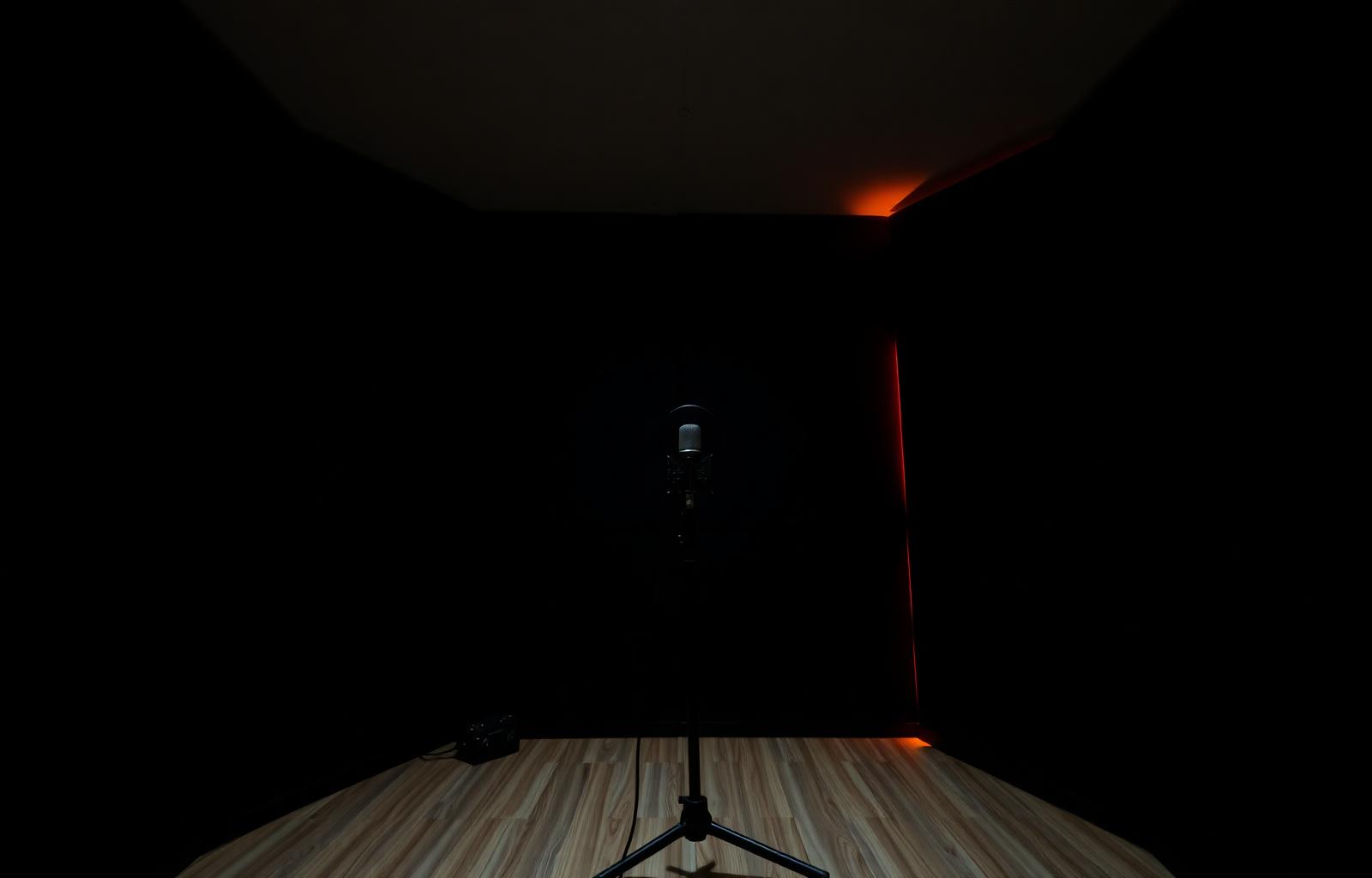
Why Room Acoustics is So Important for Beatboxing
Beatboxing is an extremely dynamic genre. Within a second, you switch between deep bass, sharp K-snares, and whispered lip-rolls. For this to be recorded cleanly in a home beatbox studio, the room has to cooperate — otherwise, transients blur, the bass booms, and a drum sample ends up sounding better than your recording.
A typical living room or office has three problems: parallel walls create flutter echoes, bare floors bounce high frequencies directly back into the microphone, and thin walls carry every “Boots and Cats” straight to your neighbors. The good news: you don't have to tear it down — you have to dampen, insulate, and rethink.
Improving Soundproofing & Acoustics
If you want to improve room acoustics, it's not about “putting as many egg cartons as possible on the wall.” It's about targeted absorption in the right places — and using materials that match the rest of your apartment.
Wall Panels
Acoustic panels made of Basotect or wooden slats with felt backing dampen mids and highs without making the room feel dead. Attach at first reflection points, not over the entire surface.
Carpets
A high-pile carpet on a heavy felt underlay decouples the floor and cuts annoying high-frequency reflections — an immediate upgrade, especially over laminate or tiles.
Curtains
Heavy, pleated curtains (velvet, molton) act as variable absorbers. Pull them closed when recording, open them for practice sessions.
Bass Traps
Low frequencies accumulate in room corners. Fabric-covered mineral wool towers are the most important DIY component in the studio.
DIY Ideas That Actually Work
- Fill wooden frames with mineral wool (10 cm), cover with fabric — looks like wall art, absorbs mids/highs.
- Bass traps made of rock wool in all room corners — catches the boom in the lower frequencies.
- Heavy, lined curtain in front of the door — decouples cheaply and makes the room cozier.
- Reflection filter directly behind the microphone if you can't treat an entire wall.
Creative Renovation Ideas for Music Rooms
Renovating a music room isn't just about “acoustics.” You sit there for hours — so the room also needs to inspire you. A few small changes make the difference between a storage closet and a creative space.
Lighting
Indirect warm light (LED strips behind shelves, dimmbable floor lamps) reduces fatigue during long sessions and makes videos instantly look good.
Wall Design
A dark accent wall absorbs reflections both visually and acoustically. Use posters, plants, or slat panels selectively — not everywhere.
Small Studios
Folding desk, rolling microphone stand, wall hooks instead of furniture. Every piece of furniture must serve two functions.
Cable Management
Cable channels behind the desk, Velcro ties, firmly screwed USB hub. Saves nerves and looks professional in every reel.
Plan before the first drill hole: Where will the microphone go? Where's the computer? Where's the outlet? A day with a tape measure and a rough sketchpad saves weeks of frustration later — especially in small apartments where every square meter counts.
If you realize during studio planning that it's less about acoustics and more about wall construction, flooring, or electrical installation, you often need a specialist company. When searching for experienced craftsmen for renovation, interior work, or interior design, allesrenoviert.de helps you quickly find the right specialists — from dry liners and electricians to floor layers. This gets you to your goal much faster, so you can focus on what matters most: the sound.
Frequently Asked Questions
How can I improve the room acoustics in my beatbox room?+
Reduce hard, parallel surfaces: thick curtains, a high-pile carpet, and a few acoustic panels at first reflection points (to the side of the microphone and on the ceiling above it) make the biggest difference. Bookshelves also act as diffusers.
What does soundproofing do in a rental apartment?+
Classic acoustic panels dampen the room but block very little sound. For neighbors, decoupled stud walls, heavy curtains on doors, seals on windows, and a thick carpet on a heavy underlay help. Without structural intervention, the main things are: quiet times of day and a dynamic microphone close to your mouth.
Which materials actually help with soundproofing?+
Mass + decoupling + absorption. In practice: double-layered drywall with resilient channels, mineral wool in the cavity, heavy doors, acoustic foam or Basotect panels for reflections, and bass traps in the room corners.
Can I use a small room as a beatbox studio?+
Yes. Small rooms are even easier to dampen but need targeted bass absorbers in the corners. Don't place the recording spot centered between two parallel walls, but slightly offset, and work with a dynamic mic with a tight polar pattern.
Continue Reading on Beatbox School
Studio is ready. Now for the sound.
In the Crash Course, you'll learn in a structured way the sounds that will really bring your new home studio to life.
View Crash Course →